What helped me transform my face
My transformation came from looking at the whole picture: muscles, lymph flow, posture, food, sleep and skin care - not just one exercise.
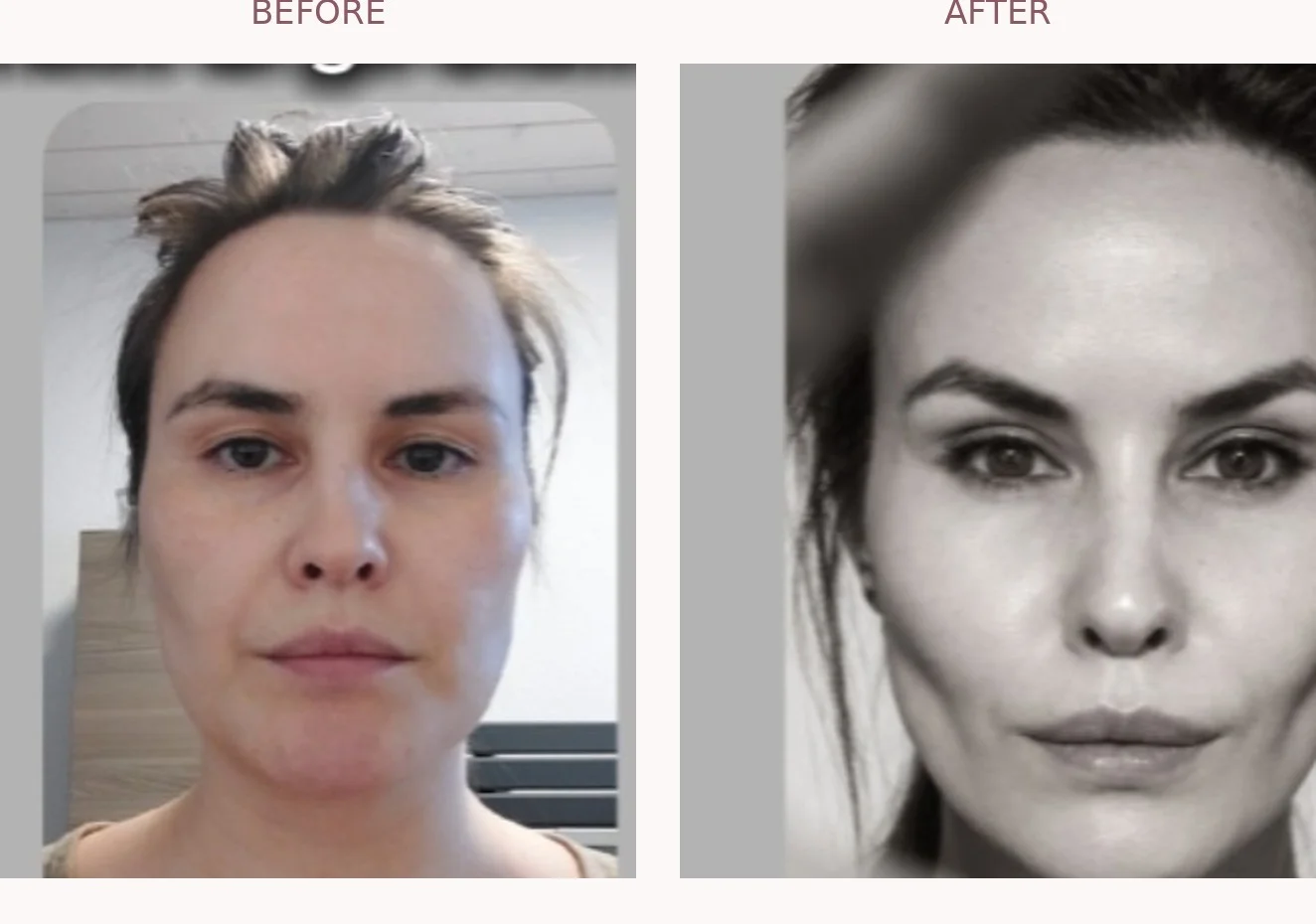
10 things to work on for a transformation
Start gently, stay consistent, and pay attention to what your face is showing you.
Understand the reason first
Puffiness, tension and / or changes in the support structure (bone structure of your skull) can have different contributors. Observe before copying a technique.
Support lymph flow
Use gentle drainage prep and regular movement. Keep pressure light.
Activate the lifting muscles
Work the lifting muscles marked green (see next section in the map) with small, controlled movements.
Relax downward pull
Soften the muscles marked red ( in the muscle map below), along with jaw and chin tension. Do not force or overstretch.
Reset your posture
Let your ears sit comfortably over your shoulders, soften your shoulders and unclench your teeth.
Eat enough protein
Include a protein source with meals to support normal muscle maintenance and recovery.
Choose nourishing foods
Build balanced meals with colorful produce and sources of healthy fats.
Drink enough water
Hydration supports normal body function and fluid movement. Choose an amount that suits your needs.
Prioritize sleep and manage stress
Recovery matters. Protect your sleep and make room for small pauses to unwind.
Care for your skin consistently
Use sun protection and a simple routine. Compare photos in similar light as you go.
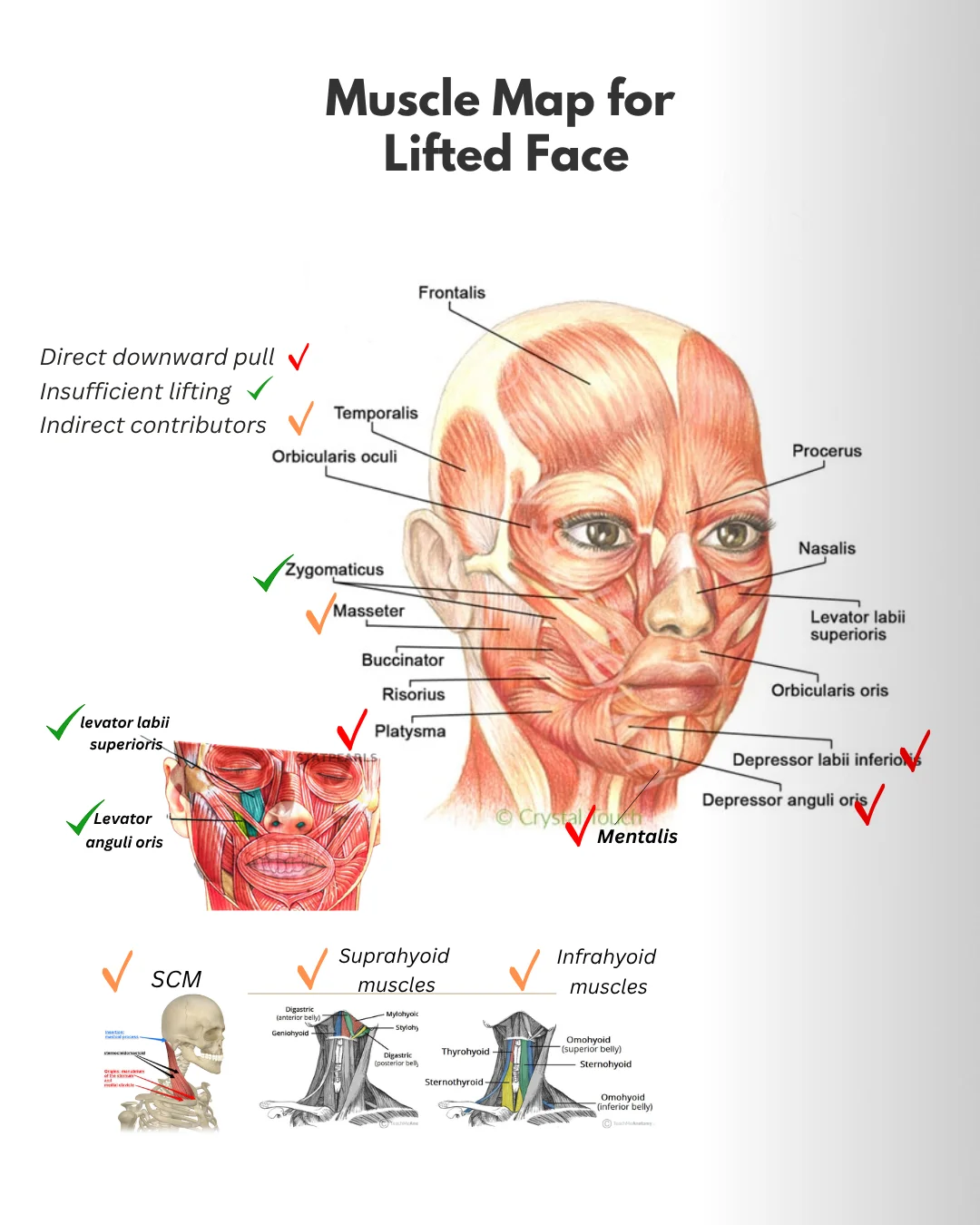
Muscles matter, but so does the pattern
Gently work the lifting muscles I marked green.
Release excess tension in the downward-pulling muscles I marked red.
These marks point to areas that may contribute indirectly, including the jaw and neck.
One of the 17 courses in the bundle goes deeper into how to work with these muscles.
The map is a guide, not a diagnosis. Your face may have more than one contributing factor.
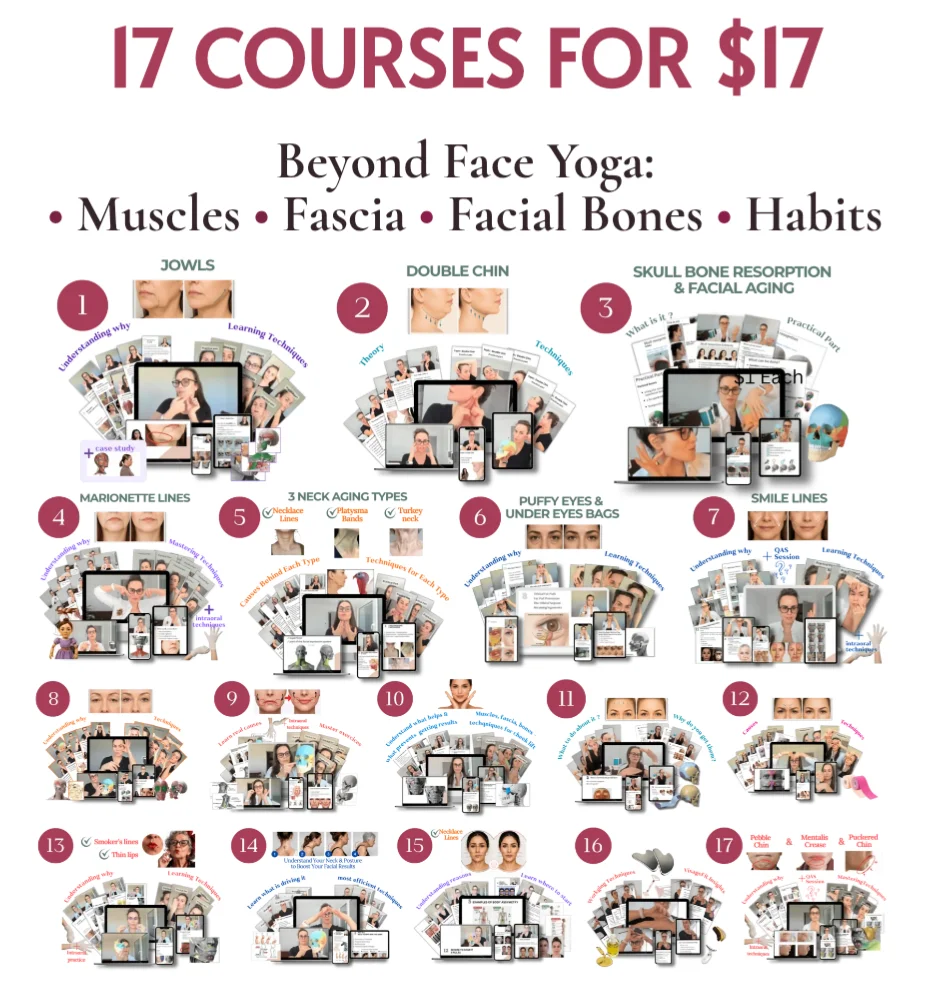
Understand the cause. Know where to focus.
Inside my 17-course bundle, I break down common facial-aging signs, explain what may contribute to them, and show the techniques - so you understand why you are doing them, how to get results and how to preserve them.
Explore 17 courses + 2 bonuses for $17Educational content. Individual results vary; this is not medical advice.