Why It's So Important to Work with the Maxilla
You've probably heard about collagen loss, facial muscles, and sagging skin. But what about the bone at the very center of your face?
What exactly is the maxilla?
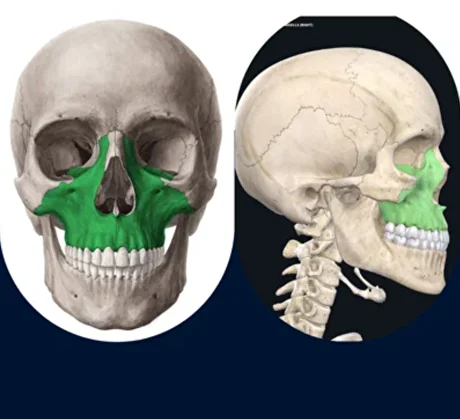
The maxilla is the upper jaw bone. It sits at the center of your face and helps form the structure around your nose, the lower part of your eye sockets, your upper teeth, and the midface.
It's sometimes called the “bone of beauty” because its shape and position play such an important role in facial proportions and the support of the surrounding soft tissues.
When you look at the cheeks, the area beneath the eyes, or the transition between the nose and upper lip, you're looking at regions influenced by this underlying structure.
Your facial bones age too
Most anti-aging conversations focus on what happens to the skin: wrinkles, reduced elasticity, and changes in facial volume.
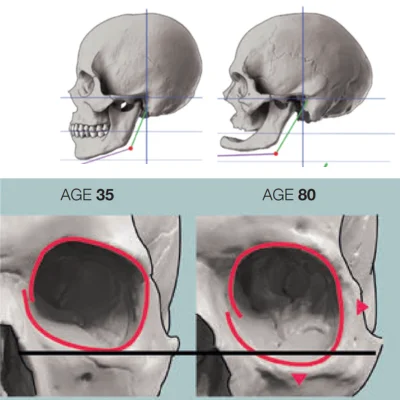
But the facial skeleton also remodels with age. Research describes changes in the shape and dimensions of several facial bones, including the maxilla and the bony openings around the eyes and nose.
These changes can alter the underlying support for facial fat, muscles, and skin. They are one part of the bigger picture of why a face may look different over time.
Important distinction: Bone-density changes measured elsewhere in the body cannot simply be translated into a specific percentage of maxilla loss. Facial aging is individual and involves bone, fat, muscles, fascia, skin, and dental health.
It's not just about losing volume
With age, the maxilla and neighboring structures can undergo remodeling that changes facial projection and support. The surrounding soft tissues also change, so the visible result is never explained by one bone alone.
This helps explain why simply adding skincare or doing isolated cheek exercises may not address every factor involved in how your midface looks.
And it's not just about bones. If left unaddressed, imbalances in muscles and fascia—not only in the face, but throughout the body—can contribute to very visible facial asymmetry.
For me, understanding the underlying anatomy completely changed how I approached facial rejuvenation.
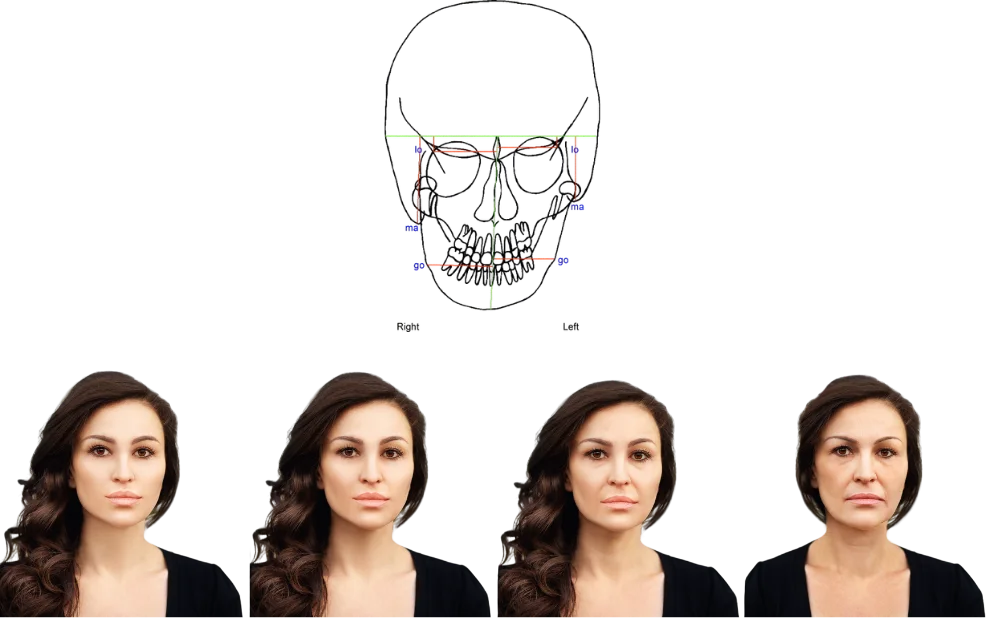
Why I don't work with facial muscles alone
I started with facebuilding and skincare, but as I studied facial anatomy, fascia, posture, and cranial techniques, I began looking at the face as a connected system.
My approach considers several levels rather than relying on one isolated technique.
About tongue posture: Pay attention to where your tongue rests throughout the day! Ideally, it should rest gently against your upper palate, without pushing against your teeth. Even this light, continuous pressure provides gentle contact with the maxilla. That’s why I consider proper tongue posture so important as part of my daily approach to supporting midface structure and projection.
What changed when I expanded my approach
My own journey didn't begin with facial and cranial work. First, I focused on facial muscles and skincare. Later, I incorporated posture, body work, and techniques informed by my studies of facial and cranial anatomy.
These photos show the visible progression I experienced as I expanded my approach.
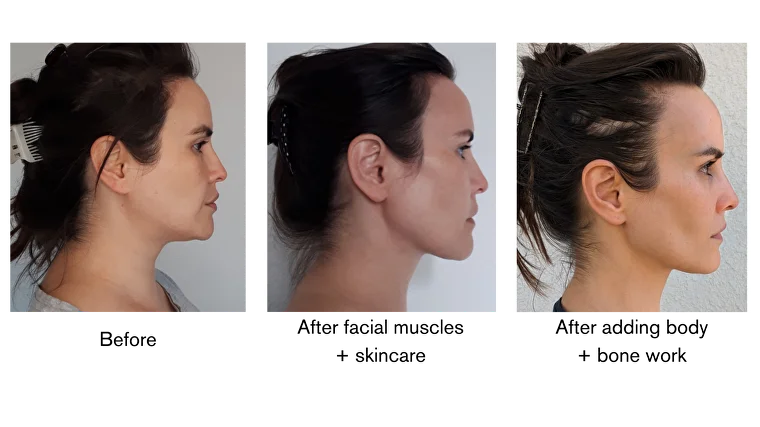
My biggest lesson? Understanding what you're working with matters just as much as learning the technique itself.
There's more to facial structure than one bone
The maxilla is central to the midface, but it doesn't work in isolation. Its relationship with the rest of the facial skeleton is part of what makes facial proportions so interesting.
In Day 3, we’ll explore horizontal versus vertical facial development and why these differences matter when it comes to your facial structure and aging.
Educational content only. Facial anatomy and age-related changes vary from person to person. Work gently and seek qualified medical advice for pain, dental concerns, or recent procedures.