VISAGEFIT · DAY 3 OF 5
Horizontal vs. Vertical Facial Development: Why It Matters for Aging
Yesterday, we explored the maxilla—the bone of beauty. Today, let's look at the bigger picture: why two faces can age differently, even when their skincare routines are similar.
Your Face Is More Than Skin and Muscles
When we look at a face, we notice the skin, cheeks, jawline and wrinkles. But underneath all of that is a three-dimensional framework: the facial skeleton.
Its shape and proportions influence how the surrounding muscles, fascia, ligaments and soft tissues are supported. That's one reason I don't believe facial rejuvenation should focus on skin or individual muscles alone.
We discussed bone remodeling on Day 1. Today, I want to focus on the direction of facial development and what it can mean for the appearance of the midface and lower face.
Horizontal vs. Vertical: Look at the Difference
These illustrations show two different patterns of facial proportions. They're useful for understanding structure—not a diagnosis or a strict classification of every face.
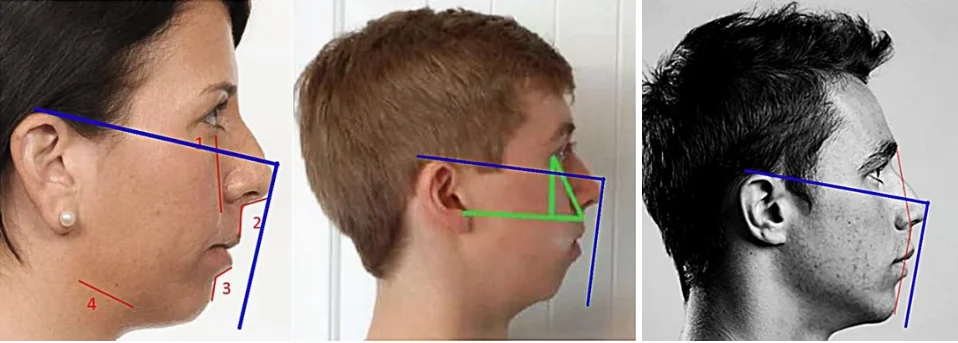
More Vertical Development
- A longer-looking facial profile
- Less visible forward midface projection
- Cheekbones that may appear less prominent
- Softer-looking definition through the jawline
- Differences in how the soft tissues drape over the face
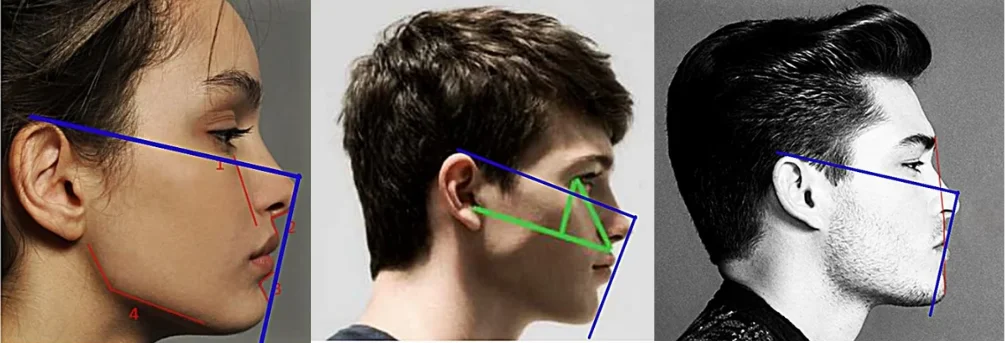
More Horizontal / Forward Development
- More visible forward midface projection
- Cheekbones that may look more prominent
- A different relationship between the nose, upper jaw and chin
- Potentially more defined-looking facial contours
- A different pattern of soft-tissue support
Neither illustration is a beauty standard. The important point is that facial structure is individual—and the same wrinkle or double chin can have different contributing factors in different people.
What Influences These Different Growth Patterns?
Facial development is influenced by genetics, jaw and dental growth, breathing patterns, and the way the tongue, lips and chewing muscles function—especially during childhood and adolescence.
Mouth breathing is one factor worth understanding. When someone regularly breathes through the mouth, the lips may stay apart and the tongue may rest lower in the mouth rather than against the upper palate. This changes the usual resting relationship between the tongue, cheeks and jaws.
Studies comparing children who predominantly breathe through the mouth with those who breathe through the nose have found associations with a narrower upper dental arch, increased lower facial height, and more downward-and-backward jaw growth patterns. That helps explain why breathing and oral posture are discussed in relation to vertical facial development. These are associations, not a prediction of how every child's face will develop.
Why does the tongue matter? During growth, the tongue is part of the functional environment surrounding the upper jaw. Its resting position, together with lip and cheek pressures, swallowing and chewing, is relevant to dental arch development. For everyday tongue posture, I encourage gentle contact with the upper palate—not pushing against the front teeth and not clenching the jaw.
What causes mouth breathing? Sometimes it's a habit, but it can also be linked to allergies, chronic nasal congestion, enlarged tonsils or adenoids, or other airway issues. Persistent difficulty breathing through the nose deserves medical or dental assessment rather than forcing the mouth closed.
Our facial bones continue to remodel as we age, so pay attention to your daily habits. Make nasal breathing a priority when comfortable, keep your tongue resting gently against the upper palate without pushing against your teeth, and be mindful of jaw tension and posture.
Research: 2021 systematic review and meta-analysis · 2020 systematic review and meta-analysis
Why This Matters as We Age
Our facial appearance is shaped by much more than skin elasticity. Changes in fat distribution, muscle activity, fascia, posture and facial bone remodeling all contribute.
If the midface has less forward projection, the cheeks, under-eye area and lower-face contours can look different from someone with more forward support. This doesn't mean one pattern automatically causes jowls, puffiness or a double chin. It means the underlying structure deserves attention when you're trying to understand your own face.
And What About Muscles, Fascia and Posture?
This is the part I find especially important: the face doesn't work in isolation from the rest of the body.
Jaw tension, neck and shoulder positioning, habitual facial expressions and imbalances in muscles and fascia can all influence how we hold ourselves and how our face looks. When these imbalances persist—not only in the face, but throughout the body—they may contribute to very visible asymmetry.
That's why my approach considers the facial muscles, the scalp and facial fascia, the neck, body posture and everyday habits together.
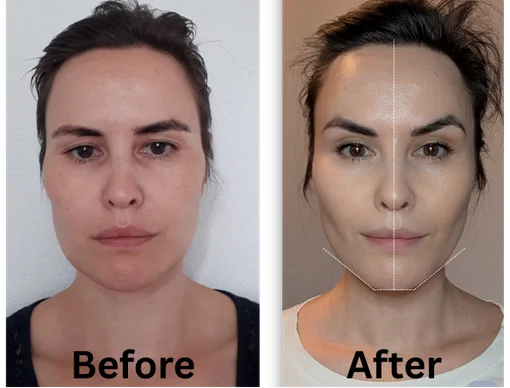
Three Habits I Pay Attention To
1. Tongue posture. I keep my tongue resting lightly against the upper palate, without pushing on my teeth. For me, it's an important part of daily oral posture awareness.
2. Neck and body posture. I pay attention to forward-head posture, tension through the shoulders and the way I hold my jaw throughout the day.
3. Muscular and fascial balance. Instead of repeating random face exercises, I look for areas of excessive tension and areas that need better coordination—on the face and beyond it.
Coming Up in Day 4: The Mandible
Tomorrow, we'll move from the midface to the mandible—your lower jaw. We'll explore how it contributes to the jawline, chin and lower-face appearance, and I'll share why I paid particular attention to mandible traction in my own routine.
See you in Day 4!
Lilya from VisageFit ❤️